For years, the packaging industry has focused much of its sustainability effort on materials. Paper instead of plastic. Recycled content instead of virgin fibers. Recyclable solutions instead of complex multi-material structures. These developments have played an important role in reducing environmental impact, but they have also created a tendency to view material selection as the primary driver of packaging innovation. Today, that perspective is beginning to change.
As e-commerce continues to grow and new regulations such as the Packaging and Packaging Waste Regulation (PPWR) push companies toward more efficient packaging systems, businesses are looking beyond materials alone. Increasingly, the conversation is shifting toward packaging design.
The reason is simple: two packages made from the same material can perform very differently depending on how they are engineered.
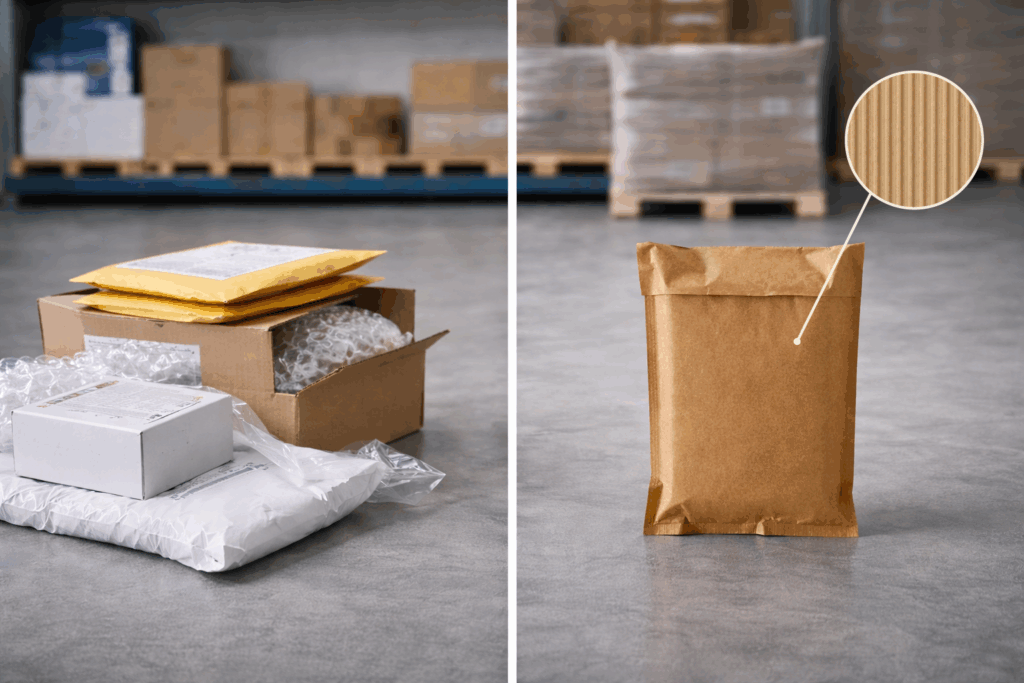
A well-designed package can reduce material usage, improve transport efficiency, optimize storage space and simplify recycling. Conversely, a poorly designed package can generate unnecessary waste, occupy excessive volume and increase logistics costs, even when made from sustainable materials. This is particularly relevant in protective packaging, where protection has traditionally been associated with adding more material, more layers and more bulk.
Today, many packaging developers are challenging this assumption. Instead of asking how to add protection, they are asking how to design protection more intelligently. One area of innovation involves using the structure of a material itself to create cushioning and resistance. By engineering shapes, geometries and internal structures, it is possible to achieve performance that previously required additional materials or more complex packaging systems.
At OFFMAR, this approach led to the development of Wave Technology, a patented paper-based cushioning structure designed to combine protection, compactness and recyclability within a single material solution. The objective was not simply to replace one material with another, but to rethink how protective packaging could be designed to use space and resources more efficiently.
This principle extends far beyond a single product or technology. Across the packaging industry, innovation is increasingly being driven by engineering and design thinking. Material choice remains important, but it is no longer the only question worth asking.
As the industry prepares for the next generation of packaging challenges, the companies that succeed will likely be those that can do more than select better materials. They will be the ones that design packaging systems that use those materials more intelligently.
Because the future of packaging will not be determined only by what it is made from.
It will be determined by how well it is designed.
OFFMAR / WAVEBAG.